
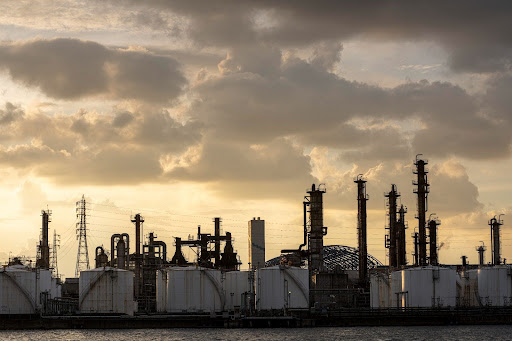
The burning of oil storage facilities in Tehran is not just a military story — it is an economic one. The black smoke rising over the Iranian capital following Israeli airstrikes carried with it a message for global markets: energy security in the Middle East can no longer be taken for granted, and oil prices above $100 per barrel may be the new normal.
Israeli forces struck at least five energy-related sites in and around Tehran, killing four workers. Iran’s Revolutionary Guards responded by threatening to drive global oil prices to $200 per barrel, a level that would inflict severe economic pain on import-dependent nations across Asia, Europe, and Africa.
Gulf states found themselves on the front lines of the expanding conflict. Saudi Arabia, the UAE, Qatar, Bahrain, and Kuwait all reported Iranian strikes. Saudi defenses intercepted 15 drones, Bahrain’s desalination infrastructure was damaged, and two people were killed in a residential attack in Saudi Arabia. A US service member died in a separate Iranian strike, lifting American fatalities to seven.
Iran’s political transition added a new dimension of risk. The clerical assembly appointed Mojtaba Khamenei as supreme leader, the first son to inherit the position from his father in the history of the Islamic Republic. The new leader’s hardline background suggested little appetite for compromise.
Washington sought to minimize the economic damage, pledging not to strike Iranian oil facilities and predicting only short-term supply disruptions. But with the conflict expanding daily and the full scope of Russian involvement still unclear, market analysts were preparing for a prolonged period of elevated prices.