
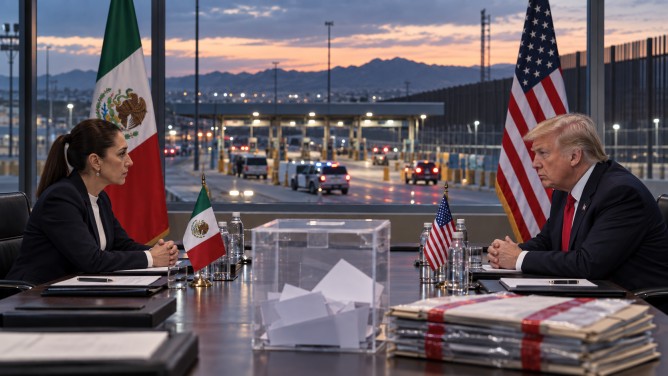
Tensions are escalating between the United States and Mexico as both nations gear up for critical elections, with U.S. President Donald Trump intensifying criticism of Mexico’s efforts to combat drug trafficking and alleged ties between organized crime and public officials. The issue has become a focal point in the political landscape ahead of the U.S. midterm elections scheduled for November.
President Trump has accused Mexico of failing to sufficiently curb the flow of illegal drugs into the United States and of not prosecuting officials allegedly connected to criminal organizations. This rhetoric has been met with resistance from Mexican President Claudia Sheinbaum, who has denounced the criticism as external interference. She insists that her government is actively addressing organized crime and corruption while defending Mexico’s sovereignty.
The discord has deepened with recent U.S. legal actions against Mexican officials accused of links to organized crime, as well as the revocation of visas for several Mexican politicians. President Sheinbaum has questioned whether these measures are politically motivated, citing the timing as suspect with respect to the upcoming elections.
In response, Sheinbaum’s administration has called on the United States to bolster efforts against drug distribution, money laundering, and the illegal flow of weapons from the U.S. into Mexico. Concurrently, her government has taken steps to dismantle suspected criminal networks and is pushing the Morena party to enforce stricter background checks and financial disclosure requirements for political candidates.
The intensifying dispute is also shaping Mexico’s internal political discourse, with opposition parties seizing on allegations of “narco-politics” to challenge the ruling Morena party ahead of Mexico’s 2027 elections. These developments highlight the complex interplay of crime, politics, and diplomacy as both countries navigate their respective electoral landscapes.