
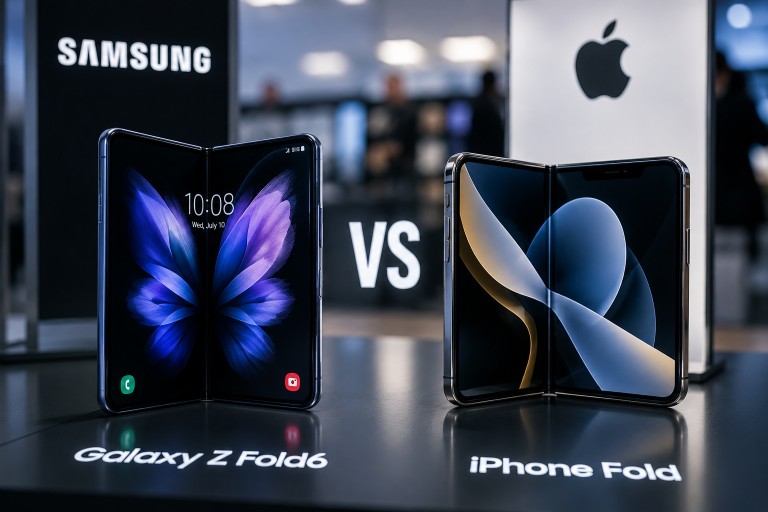
Samsung Electronics is set to showcase its newest Galaxy foldable smartphones on July 22, aiming to bolster its standing in the high-end foldable market before Apple makes its anticipated debut in the segment. The unveiling highlights an ongoing rivalry in the smartphone industry, which last year saw a shift in focus towards ultra-thin designs. However, industry insiders note that consumers continue to prioritize features like battery life, camera quality, durability, and pricing over mere slimness.
Significantly, the latest iteration of Samsung’s Galaxy Z Fold is both thinner and lighter than its previous model, showcasing advancements in hinge engineering, battery efficiency, display technology, camera capabilities, and thermal management. Samsung’s goal is to enhance the practicality of foldable smartphones for everyday use without sacrificing performance, a move that reflects the company’s commitment to innovation in the foldable space.
Meanwhile, Apple is expected to launch its first foldable iPhone later this year, although the tech giant has yet to officially confirm these plans. Reports suggest that Apple’s entry into the foldable market will focus on integrating a durable folding screen, robust camera systems, extended battery life, and a lightweight form factor, positioning itself as a formidable competitor in the premium smartphone arena.
The foldable smartphone market is witnessing increased competition, particularly from Chinese manufacturers who are releasing devices that are not only thinner but also equipped with larger batteries. This trend is prompting companies to shift their strategy from merely achieving the sleekest design to offering a more comprehensive user experience that balances various consumer demands.
Despite the growing competition, Samsung remains at an advantage due to its well-established foldable ecosystem, extensive global distribution channels, robust software support, and AI-driven features. Industry analysts predict that Apple’s entry will not only heighten competition but also drive further innovation in the premium smartphone market, ultimately benefiting consumers with enhanced technology and design choices.