
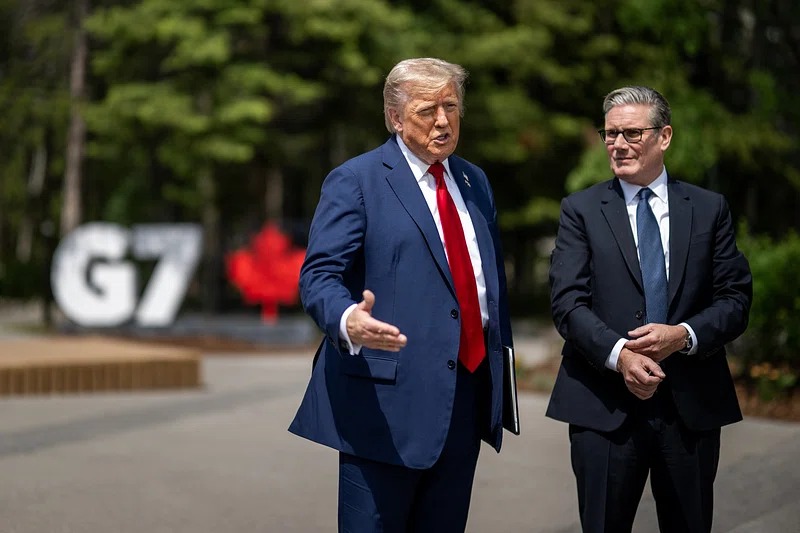
The moment Britain reversed its position and granted American forces limited use of its military bases for operations linked to Iran, many in London hoped the gesture would be sufficient to repair a damaged relationship. Washington’s reaction suggested otherwise.
The American president, far from welcoming the change of heart, used it as an occasion for a further rebuke. He acknowledged that Britain had apparently been considering sending aircraft carriers to the Middle East — and then dismissed the offer as no longer necessary. The implicit message was that the window for meaningful contribution had already closed.
British defence officials, for their part, sought to frame the episode positively. Four US bombers had used the Fairford base and conducted operations that, London insisted, had helped prevent Iranian missiles from being fired into the region. The operations had been brief, specific, and limited — exactly as the permission granted had required.
But the optics were unhelpful. Britain had publicly refused, been publicly criticised by the most powerful man in the world, and then publicly reversed its position — only to be told that its eventual cooperation was no longer required. For a country that places great store by its relationship with the United States, the sequence of events was deeply uncomfortable.
The political consequences continued to unfold. The prime minister faced questions from his own party and from opposition benches about whether Britain had handled the situation well. The answers he provided — and the ones he could not provide — said much about the difficulty of the position he found himself in.