
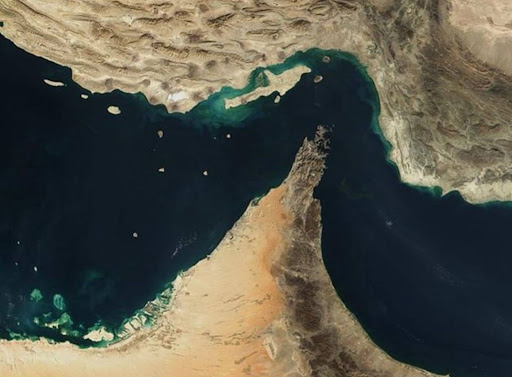
The Strait of Hormuz crisis is rapidly becoming one of the defining tests of the international community’s ability to respond collectively to threats to global energy security, with President Trump’s call for a naval coalition meeting resistance from nearly every government it was directed at. Trump posted on Truth Social urging the UK, France, China, Japan, South Korea, and all oil-importing nations to send warships to the contested waterway — but each of those governments has responded with caution, conditions, or outright refusal. The result is a dangerous power vacuum at one of the world’s most critical chokepoints.
Iran’s closure of the strait — executed as retaliation for US-Israeli airstrikes — has triggered the largest oil supply disruption in history. Approximately one-fifth of global oil exports ordinarily flow through the passage. Tehran has declared tankers bound for American, Israeli, or allied ports legitimate military targets and has attacked sixteen vessels since the conflict erupted in late February. The threat of mine deployment in the strait has added further risk to any potential naval response and has complicated the military planning of any nation considering involvement.
The most definitive European response came from France, whose defence minister ruled out any ship deployment while the conflict continued. President Macron had spoken of a future purely defensive escort mission, but only once the fighting intensity reduced. The UK confirmed discussions about mine-hunting drone options but made no concrete pledges. The EU’s Aspides naval mission — three ships from France, Italy, and Greece currently operating against Houthi threats — has been proposed for expansion to the strait, but Germany’s foreign minister expressed significant scepticism about the mission’s effectiveness, questioning whether expansion would genuinely improve maritime security in the region.
Japan and South Korea — whose economies are particularly exposed to Gulf oil supply disruptions — have avoided making firm military commitments. Japan’s ruling party official described the threshold for sending warships as very high. South Korea pledged careful monitoring and multi-angle analysis of available options. The absence of a committed coalition, combined with the real danger of Iranian retaliation, has created a standoff in which the economic cost of inaction grows daily but the military risk of action remains a powerful deterrent for each potential contributor.
China’s response has focused entirely on diplomacy, reflecting its unique position as both an Iranian ally and a major Gulf oil consumer. Beijing is reportedly engaged in backchannel talks with Tehran about allowing oil tankers to transit the strait safely. The Chinese embassy in Washington stated China’s commitment to constructive communication and regional de-escalation. US Energy Secretary Chris Wright expressed optimism that China could be a constructive partner, noting that dialogue with multiple nations was underway about restoring normal conditions to the world’s most strategically important oil shipping lane.