
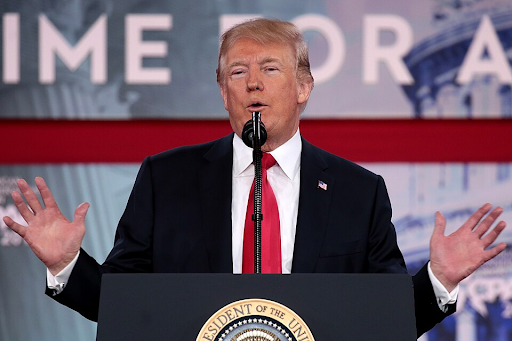
Donald Trump has provided a glimmer of hope to the global economy by suggesting that the US-Israel military campaign against Iran could reach a conclusion “very soon.” This optimism led to an immediate cooling of the oil markets, with Brent crude dropping from its Monday peak of $119.50. The President’s move to reassure investors comes at a critical time, as high energy costs have begun to trigger emergency measures in several major economies.
The conflict reached a boiling point when the IRGC claimed complete control over the Strait of Hormuz, a passage vital for 20% of the world’s oil and gas. For seven days, the strait has been effectively closed to Western-aligned shipping, leading to a supply squeeze that has affected global refineries. Iran’s vow to block “every single litre” of oil exports was the primary catalyst for the recent record-breaking price increases.
To address the shortage, the Trump administration is exploring a temporary lifting of oil-related sanctions. This includes allowing certain countries, such as India, to continue purchasing Russian crude despite ongoing efforts to isolate Moscow. Trump stated that these waivers are a necessary “emergency measure” to ensure that the global energy supply remains functional until the strait is fully reopened.
The impact of the volatility has been felt globally, leading to price caps in countries like Hungary and South Korea. In Bangladesh, the government has even closed universities and moved up national holidays to conserve electricity and fuel. These developments show that the “war premium” on oil is not just a figure on a trading screen, but a real-world burden for billions of people.
As the military situation moves into what Trump calls a “very complete” phase, the focus shifts to the future of maritime security in the region. France has proposed a multi-national naval escort mission to protect tankers once the most intense fighting has ceased. This plan is seen as a vital step toward restoring the flow of trade and bringing oil prices back to pre-war levels.