
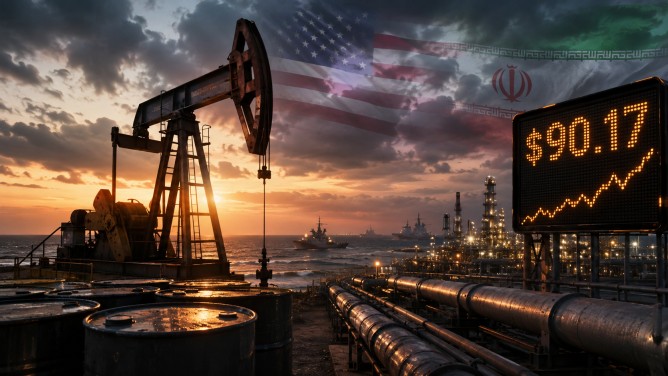
Oil prices have surged as the deadline for peace negotiations between the United States and Iran passed without an agreement, sparking concerns about potential long-term disruptions to global energy supplies. Brent crude has risen past the $90 mark, hitting approximately $91.63, marking its highest point since the end of July. This price hike follows U.S. President Donald Trump’s ultimatum demanding Iran’s surrender, coupled with his warning that the conflict could intensify if diplomatic efforts remain unsuccessful.
The situation has brought increased attention to the Strait of Hormuz, a vital corridor for global oil transport. A noticeable decline in the number of commercial ships navigating this strategic passage has heightened fears of extended disruptions in oil delivery. Iran has suggested it might adopt a more confrontational military approach should the talks fail, and a recent reported attack on a cargo vessel traversing the strait has further escalated worries about maritime security in the region.
With the possibility of prolonged supply interruptions, investors are bracing for what could be a sustained period of volatility in the oil market. Any extended closure or reduction in traffic through the Strait of Hormuz is likely to exert additional upward pressure on crude prices, compounding the current challenges facing the energy sector.
Analysts caution that the ongoing tensions in the Middle East, compounded by the conflict in Ukraine, could introduce further instability into global energy markets. This combination of geopolitical pressures may drive oil and gas prices even higher, affecting economies worldwide.