
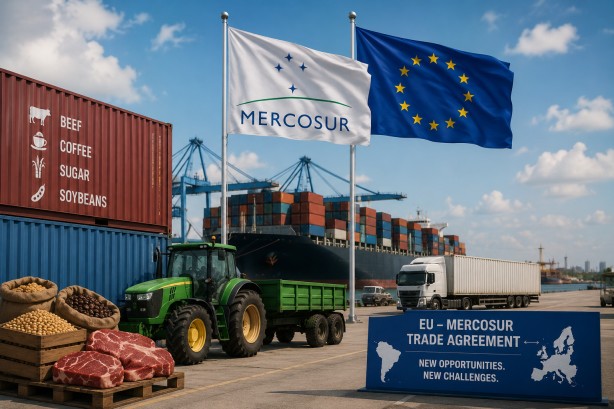
The recently enacted trade agreement between the European Union and Mercosur is reshaping the competitive landscape for producers in Brazil, Argentina, Uruguay, and Paraguay. This deal, while offering Mercosur countries enhanced access to European markets, simultaneously introduces a wave of European products into their domestic markets. Industries that have traditionally thrived under protectionist policies are now bracing for intensified competition from European goods.
Among the most affected by this shift are producers of wine, cheese, honey, and chocolate. Premium cheese makers, in particular, anticipate heightened competition from well-established European brands. The agreement also imposes new regulations on the use of geographical names, limiting the application of certain European product names to those not produced within the continent, though some current users might be granted exceptions.
Proponents of the trade deal assert that the overall advantages will surpass the challenges posed. They argue that increased trade and investment opportunities could bolster Mercosur’s standing in the global economy and promote deeper cooperation among its member nations. Additionally, the agreement potentially paves the way for Mercosur to explore further trade alliances with nations like Canada, Japan, and the United Arab Emirates.
However, critics caution that the agreement may exacerbate the region’s reliance on exporting raw materials, favoring larger agricultural and industrial enterprises over smaller producers. For these smaller businesses, the priority is increasingly on enhancing competitiveness and adjusting to the evolving market dynamics as European imports gain a foothold in South American markets.