
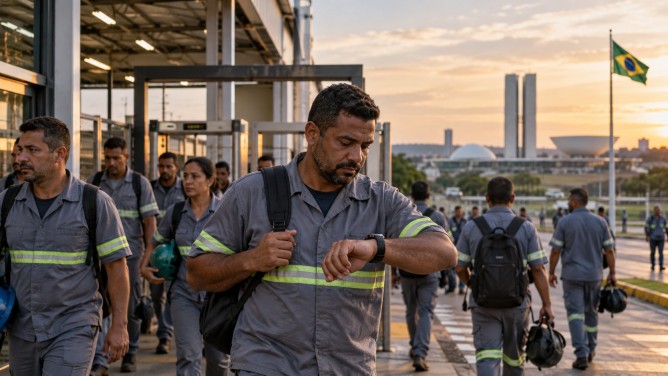
Brazil’s Congress has passed a constitutional amendment to reduce the maximum workweek from 44 to 40 hours, a move that marks a significant win for President Luiz Inácio Lula da Silva just ahead of the presidential runoff on October 25. The reform is poised to impact over 30 million Brazilian workers by curtailing work hours and ending the prevalent six-day workweek.
The amendment, which initially cleared Brazil’s lower house in May, was overwhelmingly supported in the Senate, with 75 senators voting in favor and only one against. This legislative change is aimed at improving work-life balance, especially for employees in sectors like retail, restaurants, and hotels, where six-day work schedules are common.
Currently, many Brazilian workers endure a six-day workweek with only a single day off. The new reform will gradually implement a reduction in maximum weekly working hours, first to 42 hours and ultimately to 40 hours, following a transition period of 60 days and an additional 14 months after formal promulgation. This change is expected to provide workers more time for rest, family responsibilities, and personal pursuits.
Lula has been a staunch advocate for this reform, emphasizing that workers deserve increased time with their families to enhance their quality of life. The recent approval of the amendment could bolster his electoral campaign, particularly among low-income workers who have long faced extended working hours with minimal respite.
Flávio Bolsonaro, Lula’s far-right opponent in the presidential race, initially opposed the proposal, citing potential unemployment risks. However, he shifted his stance prior to the Senate vote, acknowledging the public’s backing of the reform.
This proposal originated from a grassroots campaign advocating for a healthier balance between work and personal life and gained traction through support from Lula’s political party. Proponents argue that reduced working hours could enhance physical and mental well-being and provide greater opportunities for education and family care.
Labor researchers have noted the challenges faced by workers who only receive one day off weekly, suggesting that such schedules contribute to exhaustion, workplace risks, and limited social opportunities, particularly impacting women with significant unpaid domestic duties. With the presidential runoff approaching, the reform presents Lula with an opportunity to highlight progress on workers’ rights and economic well-being.